Kansas to Expand Education, Workforce Opportunities for Youth in Detention

Ryah Klima • November 18, 2024

Share this article

The Imprint, Nov. 6, 2024 – click to read original article

A new law in Kansas calls for allowing detained youth to leave their locked juvenile facility unsupervised so they can shadow workers, participate in apprenticeships and take college-level classes in person. 

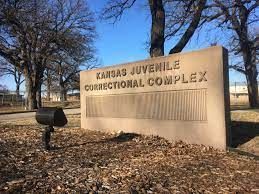
Kansas Juvenile Correctional Complex sign beside bare trees on a sunny day

State corrections officials said they are in the early stages of crafting what the program will look like for residents housed at the Kansas Juvenile Corrections Complex. There are few details at this point, they said.

But under the new law set to go into effect next year, youth from the state’s only medium to maximum security facility would be allowed to attend vocational programs or community colleges without a staff member or designated adult accompanying them, state officials said. To be eligible,   the state’s Department of Corrections must find that they are not a security risk, and that they will receive a “substantial benefit” by participating in programs not offered at the youth prison ,  according to the legislation’s language.

Kansas Department of Corrections Deputy Secretary Megan Milner   said a department workgroup has been meeting to design the program and grapple with key questions, including which criminal offenses and behaviors while incarcerated might disqualify young people from participating. They are also considering how to monitor residents when they are in the community,   and how they will travel between the prison complex and their programs.  

A core issue officials say they will need to address, though, is how to balance concerns for public safety alongside a mandate to prepare youth with education and skills so that they don’t return to the life and choices that landed them in lockup after their release.

“We need proper assessments and evaluations to make sure we are not sending kids outside the gates who are not ready and responsible enough to handle that sort of freedom,” Kansas Governor Laura Kelly told The Imprint in an interview.   “But we also need to work with our employers and our educational systems so they are prepared to put in place the right structures to ensure success and public safety.”

Until now, youth requiring medical treatment have been the only residents   allowed to leave the Kansas correctional complex. Although work release programs are present in Kansas adult prisons and elsewhere in the country, it is unclear whether any other state allows juveniles to leave high security detention facilities for education or vocational training. 

But Gov. Kelly said she thinks her state’s new law regarding juvenile detainees is forward-thinking and ultimately in the best interest of the community.

“It’s very expensive for the state to incarcerate folks,” Kelly said. “When these folks get released back into our communities, we need to ensure that they have the skills, the know-how and the connections to be able to enter our workforce and be productive, rather than coming back into the correctional system because they were not well prepared.”

The Kansas Juvenile Correctional Complex is the state’s only youth prison. It currently houses about 180 young people for serious offenses such as aggravated robbery, aggravated burglary, and rape. Under state law, young people can be held there from age 12 until they reach 22 and a half. The average length of incarceration for the young men and women at the Topeka facility is about a year. 

About three-quarters of those residents are above the age of 18, state officials said. That’s due in large part to a 2016 state juvenile justice reform that increased access to diversion programs for young people arrested for minor offenses instead of locking them up. As a result, fewer youth and younger teens are ending up at the Kansas Juvenile Correctional Complex. With the facility serving a greater share of older offenders, rehabilitative and education   programs must now be tailored to their needs .

The prison currently contracts with Washburn Institute of Technology to offer in-facility and online college courses covering subjects such as carpentry, electrical training, and manufacturing skills.

But space constraints at the complex have made it difficult to offer a wider array of classes and vocational training, corrections official Milner said.   Now, the state will look to potential partners in Topeka, including community colleges, trade schools and employment programs she added.

Investing in education

Creating workforce and educational opportunities for incarcerated people has been a focus in the state. In 2022,   Gov. Kelly launched a new  Office of Registered Apprenticeships  to increase job training programs for Kansans, including formerly incarcerated adults. She has also made the Sunflower State a  leader in providing postsecondary education  in adult correctional facilities.

State officials are hoping that such investments will have long-lasting benefits for the state.

“We still have a lot of areas in our state where our workforce is lacking, where employers are struggling to fill positions,” Milner said. “The youth that we work with at the juvenile correctional facility can be a part of that solution for a lot of communities.”

Since the passage of the Elementary and Secondary Education Act of 1965, youth in the juvenile justice system have had the right to an education comparable to their peers in traditional public schools.

But Kansas lawmakers and correctional officials said their effort to educate youth offenders   is about more than fulfilling a legal obligation. They are also motivated by research that suggests education can decrease the likelihood that young people will be re-arrested once they leave the system.

A 2020 study in the Journal of Adolescence that followed up with youth offenders a year after their release found that those who had held positive attitudes about school during their incarceration were less likely to reoffend. They were also more likely to return to school. 

Other states expand access

Nationwide, other states have also moved to address the educational needs of older teens and young adults in the juvenile justice system.

The Virginia Department of Juvenile Justice currently offers a program that is most similar to what Kansas hopes to attempt: Residents of the state’s local juvenile detention facilities for lower risk offenders can participate in an “educational or rehabilitative release program’’ if they successfully pass a review of their behavior during their incarceration and score well on a risk assessment of their likelihood to reoffend. They are also assessed for their suitability for the particular community program, according to state  regulations. Residents requiring the highest level of supervision are not eligible, along with those with behavioral issues or who have attempted escapes. 

In Utah, where state officials committed to providing free college access to all youth in its juvenile facilities in 2022, youth offenders are able to enroll in virtual college coursework and earn credits towards associate or bachelor degrees. In Missouri, a minimum security 11-bed group home located on the campus of Williams Woods University allows young women in the care of the state’s juvenile justice system to take classes and eat in a dining hall on campus with other students.

College opportunities have also been bolstered in California, where recent reforms have made county-run juvenile detention facilities responsible for serious youth offenders until age 25. In 2023, California lawmakers earmarked $15 million to scale up programs that provide youth access to online community-college classes and provide support to them on college campuses after release.

Katie Bliss, who oversees the California Higher Education Project at Youth Law Center, said young people in the juvenile justice system have often had a lifetime of disjointed educational experience marked by months or years of missed classes. Others were pushed out of school through suspension or expulsion. For these students, she said, “education represents something very traumatic and not promising, and most have not been encouraged to even pursue it,” Bliss said.

But higher education opportunities can change a young person’s perspective at a time when many teenagers wrestle with questions about their identity and future prospects, she said.

“Higher education and career pathways can be so transformative for shifting what your roadmap can look like,” Bliss said.

Chuck Knapp, president of Jobs for America’s Graduates-Kansas, said the governor has created “real hope” for young people in the juvenile justice system through the new law. His organization recently started a career and leadership program that teaches job interviewing skills and resume crafting to young youth at the juvenile correctional complex. 

Running programs inside a locked correctional facility is challenging, Knapp said. Teachers are only able to include a small number of young people because of safety concerns. Allowing young people to travel outside of the correctional facility could be “life changing,” he said.

“It’s hard to shadow someone on a job just by watching a video,” he said. “There’s just something different about being there in person and building relationships.”

Recent Posts

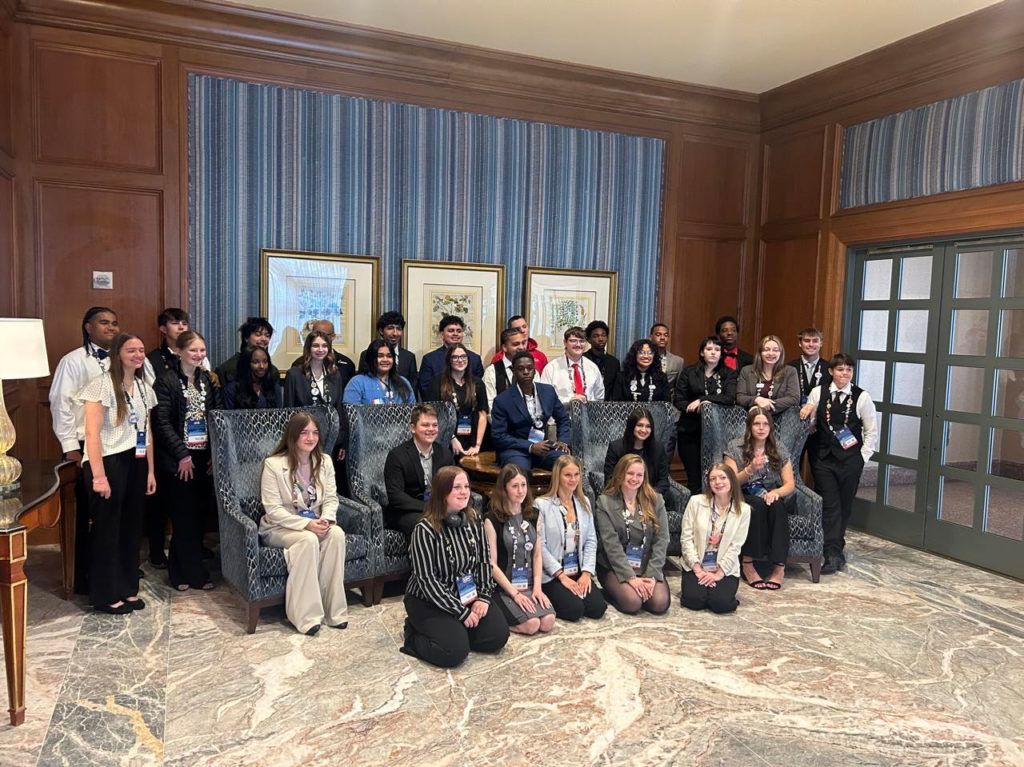
Large group posing in a wood-paneled room with framed artwork and blue-striped curtains
By Ryah Klima May 13, 2026
Kansas students excelled at the JAG National Career Development Conference in SLC. Learn how JAG-K supports student success!

Group of people posing outdoors in front of houses, smiling in casual clothes on a grassy lot.
By Ryah Klima May 8, 2026
JAG-K & Kansas Department of Agriculture host the Agriculture Summit, connecting students with career opportunities in agriculture. Join us!

Person holding a white-and-blue striped soccer jersey in a stadium with green field and blue seats.
By Ryah Klima May 6, 2026
Zamir's journey from student to pro soccer player shows JAG-K's impact. Learn how we help students succeed!
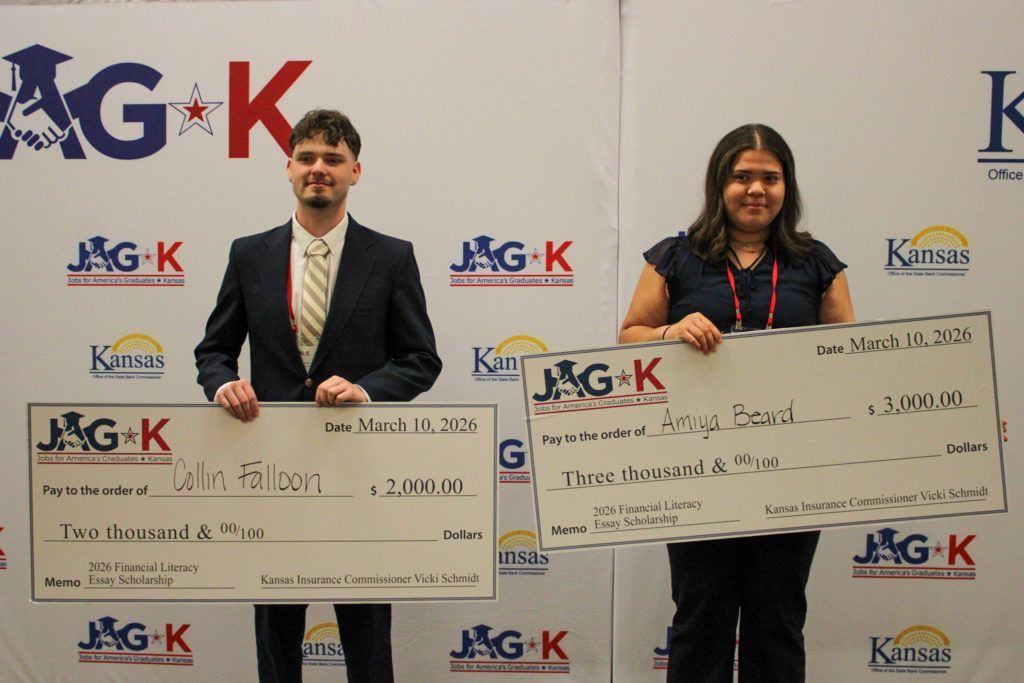
Two people hold oversized checks at an awards event with Kansas and JG+K logos behind them.
By Ryah Klima March 26, 2026
Three JAG-K students earned scholarships in a financial literacy contest. Learn more about their achievements and JAG-K's mission.

Smiling woman with blonde hair wearing a black blazer against a dark blue background
By Ryah Klima March 26, 2026
Toni Porter is appointed VP of Marketing & Development at JAG-K. Join us in welcoming her to enhance student support and community engagement.
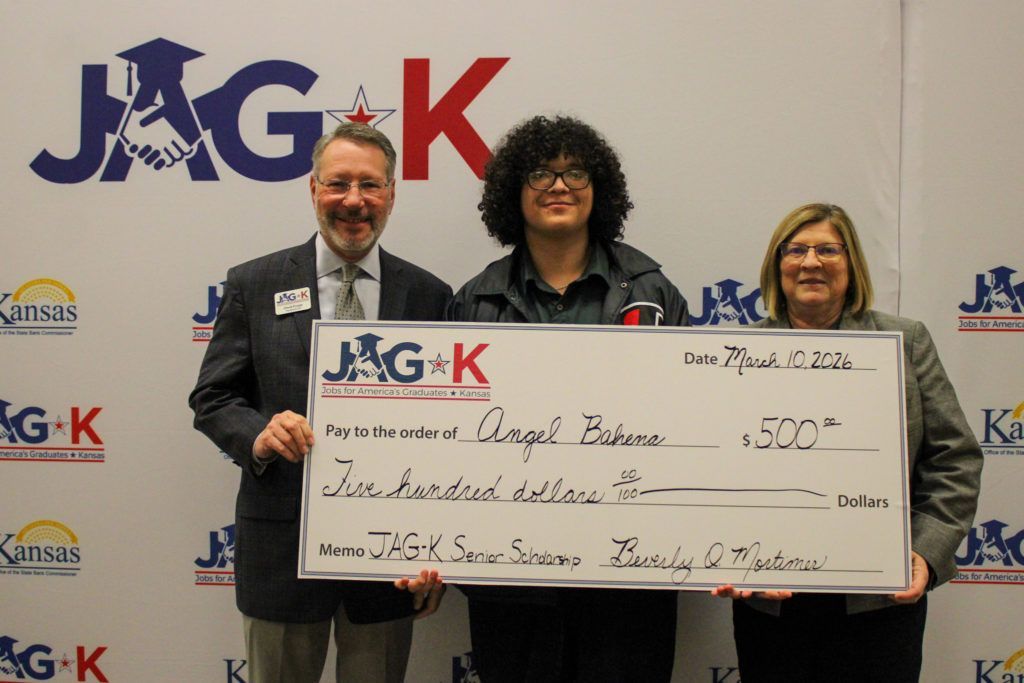
Three people hold a large ceremonial check in front of a JAG-K backdrop.
By Ryah Klima March 16, 2026
Angel Bahena from Emporia High School wins a $500 JAG-K scholarship for leadership & growth. Celebrate his achievement today!
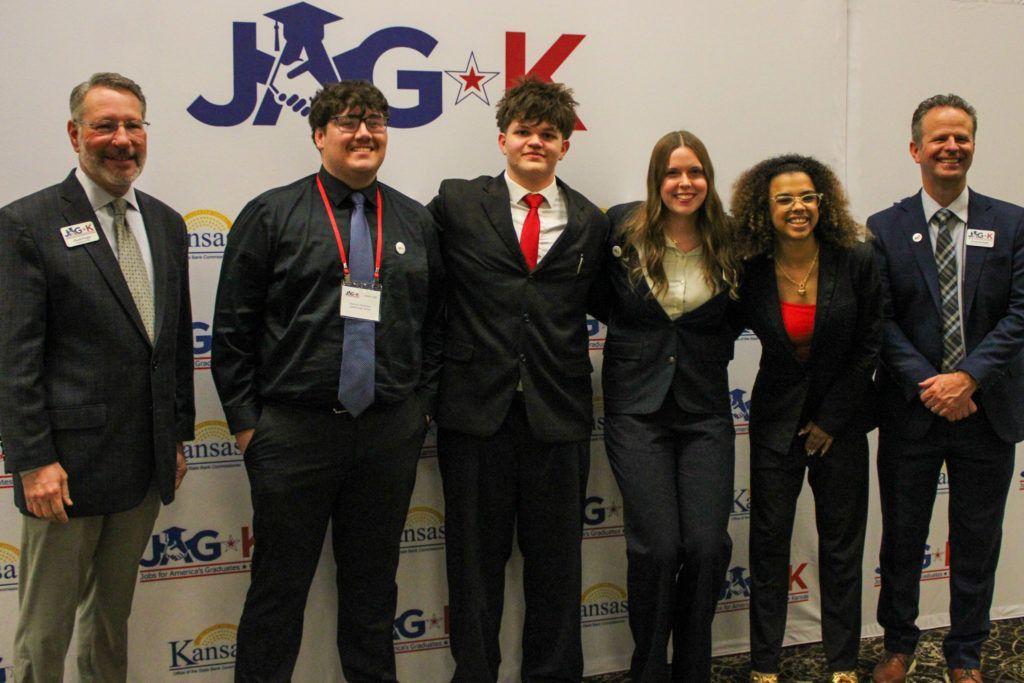
Six people in suits pose in front of a JAG-K banner at an indoor event
By Ryah Klima March 13, 2026
JAG-K students showcased skills at the Career Development Conference. Join us in supporting their future success!
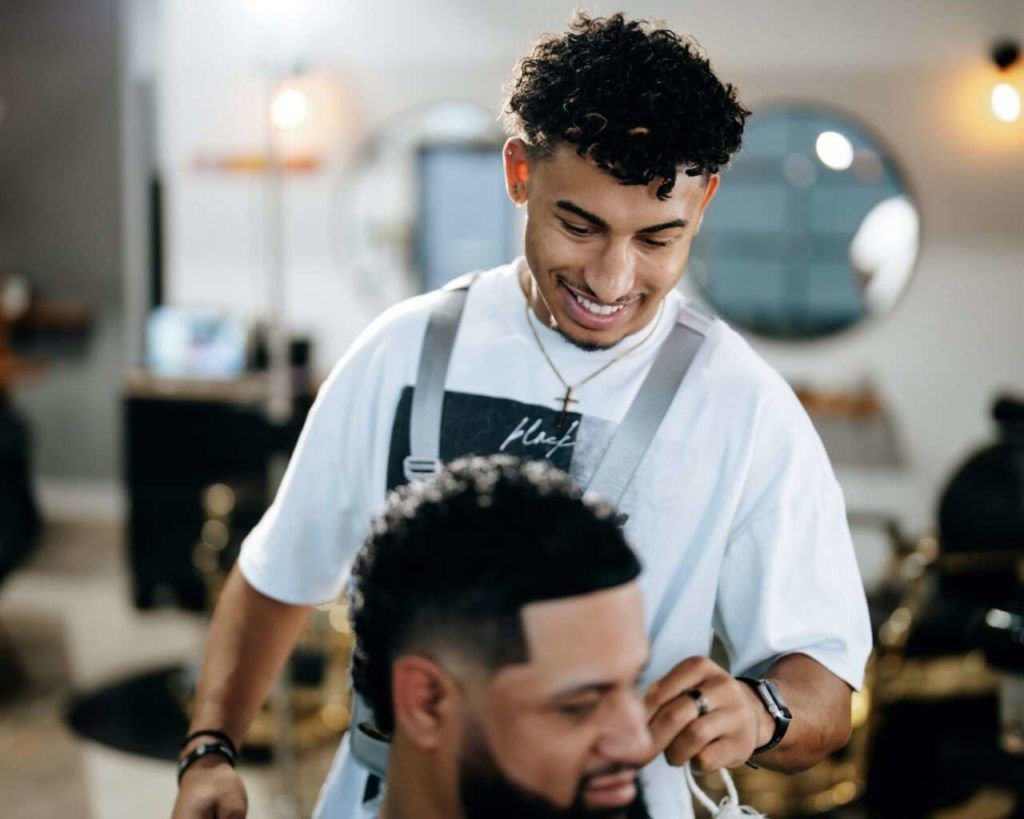
Barber styling a client’s hair in a bright barbershop, both smiling
By Ryah Klima March 6, 2026
Explore Remy Stull's journey from JAG-K to barbering. Learn how he inspires others by sharing his story and skills.

Two people in business attire using laptops at a conference table in a meeting setting
By Ryah Klima February 5, 2026
Explore Chrishayla Adams' journey from JAG-K to a Social Studies teacher. Learn how JAG-K shaped her leadership and career path.
Group of people in suits posing on the Capitol steps in front of the U.S. Capitol building
By Ryah Klima December 18, 2025
JAG-K students from Kansas showcased leadership skills at NSLA in D.C. Celebrate their achievements and advocacy for future success!
Show More